


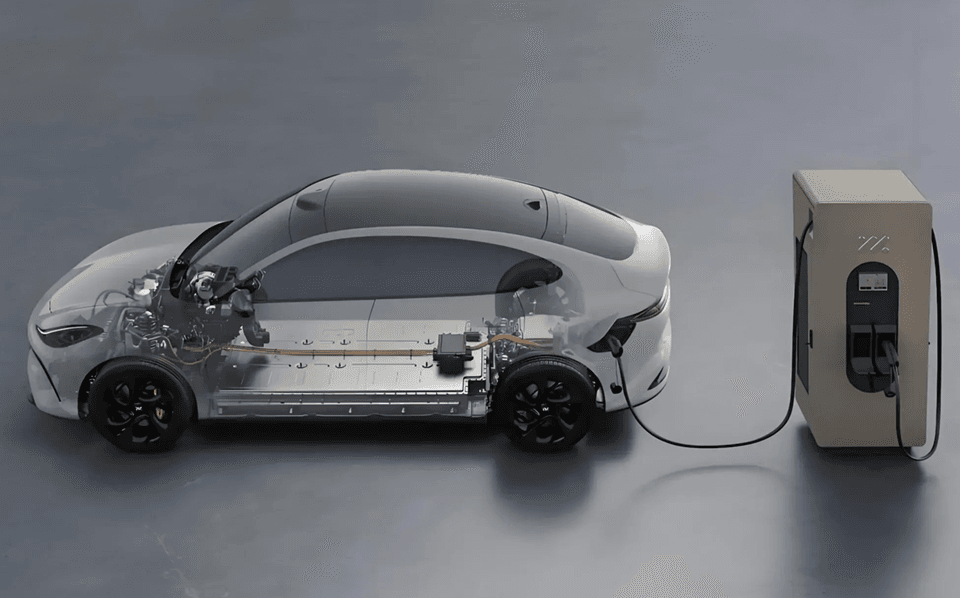
When discussing electric vehicles, many people still focus exclusively on acceleration, driving range, or the technological capabilities of the battery. In reality, however, the most important component of electric mobility is not the vehicle itself but the ecosystem in which it operates. If this system is developed and reliable, an electric vehicle becomes just as practical as any conventional car. If not, even the most advanced technological solutions may appear inefficient. As of 2026, this sector is in a phase of rapid expansion. More than 8 million public charging points are already operating worldwide, and that number continues to grow at a geometric rate. Notably, around 70 percent of the global infrastructure is concentrated in China (2.7 million public stations). These figures demonstrate that the support environment required for electric vehicles has evolved into a complete technological system, including specialized service centers, complex software solutions, and preventive technical services. In Armenia, this process has also entered a stage of consolidation, where the emphasis is placed not only, and not primarily on quantity, but on service quality and official warranties.
Charging Station Types and Power Standards
Charging infrastructure is divided into several main levels, each designed for diverse consumer needs. Home charging (level 1 and level 2) remains the most popular option, as it allows users to take advantage of lower nighttime electricity rates while minimizing battery degradation. Level 2 stations, operating at 220-240V, provide between 7 kW and 22 kW of power, which is fully sufficient to charge a modern EV in 6-8 hours. However, for intercity travel and commercial transport, DC (Direct Current) fast-charging stations are indispensable. By 2026, stations are already available on the market, capable of charging several vehicles simultaneously with up to 360 kW of power. This means that a range of approximately 400 km can be gained in just 15 minutes. Drivers should remember that charging speed depends not only on the station’s power but also on the vehicle’s onboard charger capabilities and the battery temperature.
Connector Variations and Compatibility Issues
One of the unique characteristics of the Armenian market is the import of vehicles from different regions of the world, which creates connector incompatibility issues. European models primarily use Type 2 (AC) and CCS2 (DC) standards, which are considered the most universal for local charging networks. Chinese-manufactured vehicles, such as Maxus or BYD, are equipped with the GB/T standard, which has its own separate connectors for both slow and fast charging. American Teslas use the NACS connector, which is now becoming a global standard for many other manufacturers as well. It is crucial for drivers to have high-quality adapters to enable charging at any public station. On platforms like InsideEVs, one can find detailed analyses of how the NACS standard is changing the charging ecosystem and why it is important to understand your vehicle’s specific connector features before using a station.
Access to Charging Points and Digital Applications
Locating a charging station in 2026 has become an instantaneous task thanks to integrated digital platforms. Major operators in Armenia have their own apps that allow users not only to see a station’s location but also to reserve it in advance. This is particularly important during peak hours or on long trips. Globally, the PlugShare app remains the number one tool, as it aggregates all networks and provides real-time user feedback on station performance. An essential part of the guide is also route planning; applications like A Better Route Planner (ABRP) take into account road topography, vehicle load, and even wind direction to accurately calculate where and how much one needs to charge. Mastering these digital tools reduces “range anxiety” and makes the EV experience convenient.
Maintenance and Technical Service Features
EV service centers differ significantly from traditional auto repair shops. Working with high-voltage systems requires specialized training, strict adherence to safety regulations, and specialized tools. Unlike conventional cars, a significant portion of technical issues in EVs is resolved through software updates. This is another reason to trust an official importer. Auto Gallery ensures a direct link with the manufacturer, allowing for updates and technical support directly from the factory. Furthermore, vehicles purchased from an official importer come with a long-term warranty covering the most expensive components: the battery and the electrical system. This provides the driver with total confidence and protects against unexpected costs that may arise when purchasing a vehicle from “grey” importers or individuals where warranty service is simply non-existent.
Battery Thermal Management and Maintenance
Battery lifespan is directly dependent on the condition of its Thermal Management System (BTMS). Most EVs use liquid cooling systems that require periodic inspection and replacement of the coolant. If the cooling system is malfunctioning, the battery can overheat during fast charging or heavy climbs, leading to rapid degradation. In the hot summers of Armenia, this becomes a critical factor. Specialized service centers operated by official importers should periodically inspect the condition of cooling pumps and radiators as well. Research shows that vehicles with well-designed thermal management systems lose only about 12% of their battery capacity over six years, whereas poorly cooled systems may lose up to 25%. Thermal inspections carried out at service centers help detect potential issues before they become serious problems.
Software Diagnostics and Updates
A modern electric vehicle is more like a computer on wheels than a mechanical device. Many issues that previously required physical intervention are now resolved via software updates. Computer diagnostics performed in service centers allow for the inspection of all vehicle modules and their updates, improving charging or braking efficiency. Over-the-Air (OTA) updates, first popularized on a mass scale by Tesla, are now used by other manufacturers as well. Quality repair points must be able to “connect” with the vehicle, activate necessary functions, and ensure the maps and system are up-to-date, which is vital for the correct operation of intelligent driving systems. As you can see, all of this requires serious professional and intellectual skills that can only be possessed by specialists trained at the manufacturer’s plants. All Auto Gallery specialists have undergone special certification to grant your vehicle a long life and to save you time, money, and stress.
Frequently Asked Questions (FAQ)
1. Is it safe to charge an electric vehicle in rain or snow?
Yes, all modern charging stations and vehicle connectors have high-grade protection (IP67/IP68), which prevents water penetration and short circuits.
2. Why does the charging speed drop significantly once the battery reaches 80%?
This is a protective mechanism designed to reduce power to prevent battery cells from overheating and rapid chemical degradation.
3. What is the actual lifespan of an electric vehicle battery?
With 2026 technology, batteries are designed for 1500-3000 charging cycles, which in normal usage corresponds to 10-15 years or up to 500,000 km of travel.
4. What should be done if the vehicle malfunctions and requires towing?
Most electric vehicles cannot be towed in the traditional manner, as the rotating wheels can damage the electronics. It is necessary to use only a flatbed truck.
5. How does cold weather affect charging and driving range?
In low temperatures, the chemical activity of the battery slows down, which can reduce range by 20-30% and extend the required charging time.
