


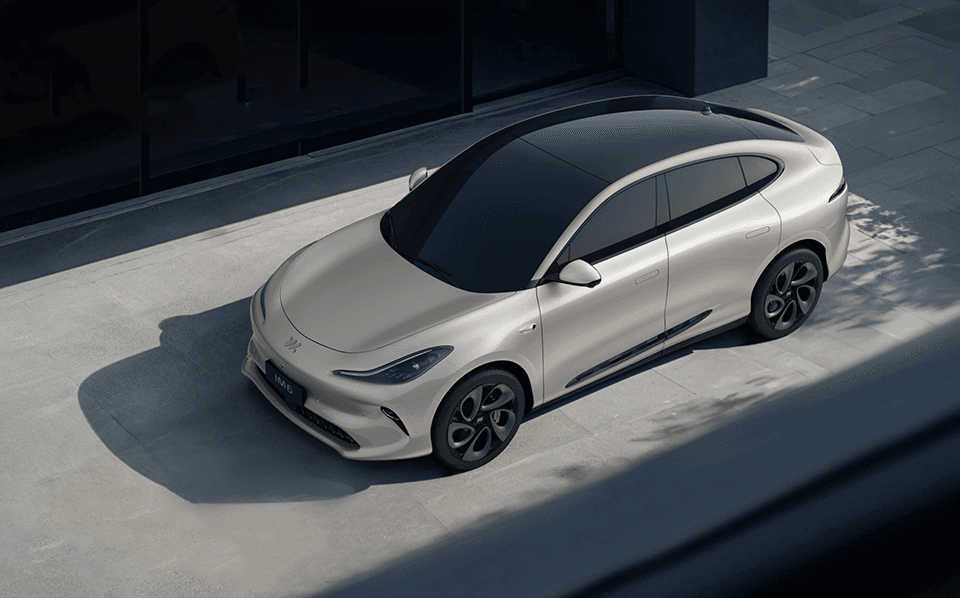
The automotive world is no longer about surprising anyone with just an electric motor. In 2026, the car has ceased to be a mere means of transportation and has transformed into a “smartphone on wheels.” Just as in the smartphone market, manufacturers are no longer competing over volume, but over technological breakthroughs. According to several analyses, a significant portion of a vehicle’s value has shifted toward software and AI integration. The so-called Software-Defined Vehicle concept means that a car’s capabilities, from safety to comfort, are shaped by software that receives over-the-air updates. This is all packaged in futuristic designs and cutting-edge driving systems, making the modern vehicle a perfect blend of design and technology.
Currently, the global market is divided into three main poles: North America, Europe, and East Asia. In the US, the focus is on electric pickups and heavy SUVs, where battery capacities are reaching a record 200 kWh. Europe, led by Germany and France, has focused on compact urban solutions and “green” supply chains. However, the fastest transformation is happening where technology and industrial capacity intersect.
China’s Technological Dominance
It is impossible to discuss EV news without starting with China — the epicenter of innovation and industry. By the end of 2025, China increased the market share of newly sold electric or plug-in hybrid vehicles to 50%. As noted in some reports, Chinese companies have succeeded because they control the entire battery production chain, from lithium processing to cell-to-body technology. The latter allows the battery to be installed not as a separate component, but as an integral part of the car’s floor and chassis. As a result, vehicles become lighter, stronger, and offer more spacious interiors.
The biggest buzz in recent months has been the mass application of Chinese semi-solid-state batteries. Unlike conventional liquid electrolyte batteries, these are safer and have a significantly higher energy density. This allows production vehicles to exceed the 1,000 km range on a single charge without adding weight. Furthermore, China leads in battery swapping stations, allowing a “recharge” in just 3 minutes, a model now being emulated in Japan and South Korea. We previously discussed this technological leap in our article, “Electric Vehicle Charging Infrastructure in Armenia.”
The Western Response: Innovation and Infrastructure
While China focuses on production volumes, the West has turned its attention to transforming the charging ecosystem. In the US and Europe, the major news of 2026 is the universal adoption of the NACS standard, leaving charging compatibility issues in the past. It no longer matters which brand of car you drive; you can access any high-speed station, a shift best illustrated by the Tesla Supercharger network expansion plan.
Another revolutionary development is the testing of wireless charging technology on highways. In Sweden and several US states, the first road segments that charge vehicles while in motion have already been launched. This could completely change the EV world by allowing for smaller, lighter batteries based on “dynamic charging,” a topic frequently covered by global outlets.
On Land, Air, and Water: Transport Diversification
The news of 2026 isn’t limited to passenger cars. As we presented in our previous article, “Why Businesses Should Choose Electric Vans,” heavy electric trucks and autonomous electric shuttles are gaining mass adoption. Notably, in European and Chinese ports, a significant portion of freight is already handled by driverless, fully electric tractors.
Another exciting direction is eVTOL (electric Vertical Take-off and Landing) technology — electric air taxis. Major metropolises like Dubai and Singapore are already testing air routes where electric motors allow for quiet, clean flights over the city. This proves that electric motor technology has matured enough to conquer not only the land but the air as well.
Smart Cities and Integration
An electric vehicle is no longer an isolated unit. At the heart of global news in 2026 are Smart Grid systems. In modern cities, cars “communicate” with traffic lights, road signs, and charging stations to optimize energy consumption.
For example, in some Scandinavian countries, the urban system can automatically suggest a charging station to a driver where there is currently an excess of solar or wind energy. This eliminates the risk of grid overload and makes charging as cheap as possible for the consumer. For Armenia, this is a vital direction, as our solar potential allows for the creation of similar integrated systems in the future.
Battery Recycling and the “Second Life”
One of the most important developments in 2026, directly affecting vehicle prices, is the maturation of the battery recycling sector. Today, more than 95% of battery materials (lithium, cobalt, nickel) are recycled globally. This means EV production is becoming a closed-loop system, reducing dependence on mining, as detailed in recent reports.
Additionally, the “Second Life” concept is gaining momentum. As we wrote in our article “Clean Air and a Healthy Environment,” batteries that are no longer suitable for driving (e.g., at 70% capacity) are repurposed as energy storage for solar plants. This is an environmental breakthrough with major economic implications, as it increases a vehicle’s residual value.
Armenia in the Context of Global Evolution
Many tend to think of Armenia as a mere consumer, but statistics and internal dynamics suggest otherwise. When considering the ratio of the population to imported EVs, we surpass many European countries.
Why does this matter? Armenia has become a unique platform where Western and Eastern technologies meet. Our market features official showrooms for famous American and European brands alongside representatives of the latest Chinese technological giants, e.g. Auto Gallery, the exclusive official representative of IM Motors and SAIC Maxus. This has created a situation where the Armenian consumer has more choice than in much larger markets. Consumers now have the opportunity to buy the futuristic Tesla Model S Plaid with its incredible acceleration or opt for the latest IM Motors L7, featuring a luxury panoramic view and cutting-edge controls. However, unlike the former, the latter is available through an official importer, offering a full factory warranty and specialized service.
Frequently Asked Questions (FAQ)
1. Why is Armenia considered a leader in electrification in the region?
Due to exceptional tax incentives (0% VAT and 0% customs duty) and a dense charging network created by the private sector that exceeds the indicators of neighboring countries.
2. What is “dry electrode” technology and why is it important?
This is a new battery manufacturing method that eliminates the use of toxic solvents, reducing factory energy consumption by 70% and significantly lowering the final price of the vehicle.
3. What does V2X (vehicle-to-everything) mean and how does it work?
This technology allows the car to “talk” to its environment. It can provide energy to your home (V2H), communicate with traffic lights to avoid congestion, or even charge another vehicle (V2V).
4. What is Europe’s “2035 Mandate” and how does it affect car prices?
The EU will ban the sale of new internal combustion engine cars from 2035. This has forced giants like Volkswagen, Mercedes, and BMW to direct their entire budgets toward EV development, lowering EV costs through economies of scale.
5. Why are major cities introducing Zero Emission Zones? Cities like London, Paris, and Shanghai have established special zones where entry for gasoline or diesel vehicles is either banned or very expensive. This forces businesses and individuals to switch to electric to maintain the ability to move freely within the city.
