


In recent years, environmental issues – and air pollution in particular – have become a major concern worldwide, and Armenia is no exception. According to the World Health Organization (WHO), the combined effects of ambient (outdoor) air pollution and household (indoor) air pollution are linked to 6.7 million premature deaths each year. That makes environmental protection not just a theoretical topic, but a real public health issue with day-to-day consequences.
Governments, international organizations, researchers, and ordinary people are all looking for ways to reduce air pollution and protect nature. In that conversation, transportation plays a key role. When people talk about the “environmental benefits” of electric vehicles, they often focus on CO₂ and climate change. But in everyday life, the most immediate difference is usually felt somewhere else: in the air quality of the city – in courtyards, at bus stops, in traffic jams, near schools, and on busy streets.
Electric vehicles won’t solve every environmental challenge a city faces. Still, they have one clear and undeniable advantage: they significantly reduce harmful emissions exactly where people walk, live, and breathe every day.
Why Transport Is One of the Main Sources of Urban Air Pollution
Urban air pollution has many contributors: heating systems, construction, industry, and seasonal dust, among others. Road transport, however, stands out for one important reason, it releases pollutants right at breathing level, in the same residential neighborhoods, streets, and courtyards where people spend most of their time.
In the context of vehicle-related pollution, experts usually highlight:
- Nitrogen oxides (NOx), which can worsen respiratory conditions,
- Particulate matter (PM10/PM2.5), which can penetrate deep into the lungs and is associated with cardiovascular and respiratory risks,
- Volatile organic compounds (VOCs) and other components that contribute to smog and deteriorate overall air quality.
The European Environment Agency (EEA) has emphasized that emissions from road transport are often particularly harmful because they affect the areas where people live and work – cities and communities.
How Electric Vehicles Help Reduce Air Pollution
Zero Tailpipe Emissions: No Exhaust Pipe, No Street-Level Pollution
Electric vehicles do not have an internal combustion engine, which means they also do not have an exhaust pipe. In practical terms, that means an EV does not release nitrogen oxides or exhaust-related particles into the air while driving, especially important in dense urban traffic and congestion.
This is a key point for city air quality: the more electric vehicles there are on the roads, the lower the amount of harmful emissions in high-exposure areas – busy intersections, bus stops, narrow streets, and other places where people are most likely to inhale traffic-related pollution.
Regenerative Braking: Less “Brake Dust”
There is an important nuance here: air pollution isn’t caused only by tailpipe emissions. That said, electric vehicles have a valuable advantage – regenerative braking, where the car slows down using the electric motor and relies less on traditional friction brakes.
Scientific studies suggest that with regenerative braking, particulate emissions from brake wear can be reduced by as much as 89.9% under certain conditions. This matters especially in urban “stop-and-go” driving, where braking happens constantly.
Does Pollution Simply Move to Power Plants?
A logical question follows: if electricity is produced at thermal power plants, does pollution simply “move” from the car to the power plant? Partly, yes – the overall emissions picture depends on the energy mix of the grid.
However, from the perspective of urban air quality, two points are especially important:
- Electric vehicles remove emissions from the street level, where people are exposed every day.
- Emissions from large power facilities are often easier to control and regulate than the combined emissions of thousands of vehicles driving through a city.
The International Energy Agency (IEA) describes electric vehicles as a key technology for transforming and decarbonizing road transport and notes that the benefits of electrification grow as energy systems become “greener.”
Where to Buy Electric Vehicles in Armenia
In recent years, the number of registered electric vehicles in Armenia has exceeded 22,000, and roughly one in four newly registered cars is already electric. This growth is driven by several factors, including favorable customs and tax conditions, lower operating costs, and a stronger selection offered by both official representatives and importers.
If you’re considering an EV as a “cleaner” and more city-friendly means of transport, you can purchase one in Armenia through an official distributor and on attractive terms.
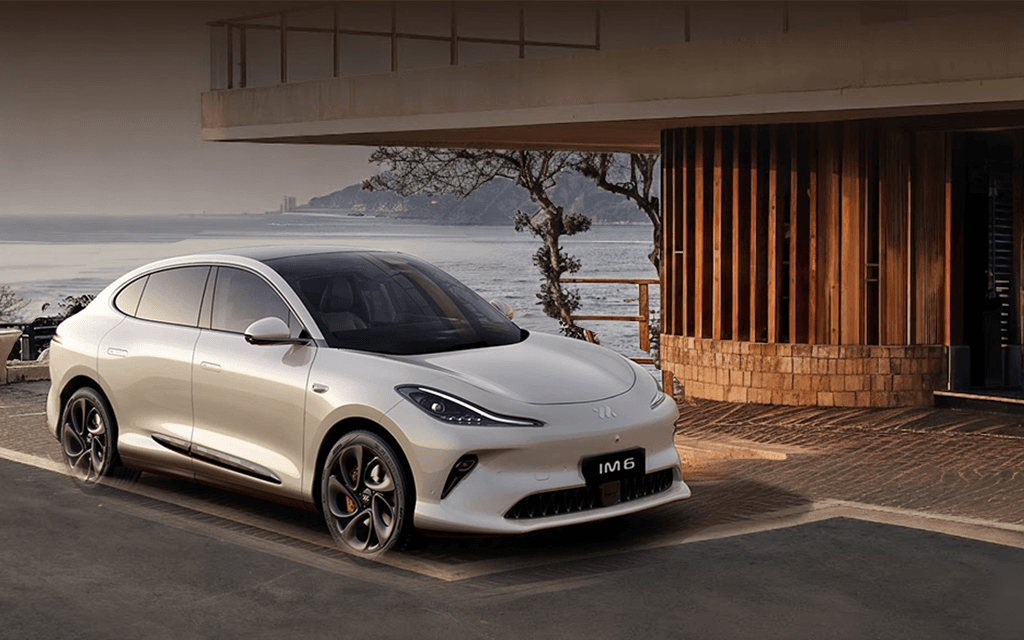
For example, Auto Gallery is the official representative in Armenia for the Chinese premium brands IM Motors and SAIC Maxus and offers a wide selection of electric vehicles – from luxury SUVs to comfortable sedans designed for everyday use, suitable for both personal needs and business.
Auto Gallery also offers the option to book a test drive, so you can experience your preferred vehicle in real traffic conditions.
Frequently Asked Questions (FAQ)
Do electric vehicles really reduce urban air pollution?
Yes. Their main advantage in cities is the absence of local, street-level emissions at breathing height, because electric vehicles have no exhaust pipe.
Do electric vehicles completely solve the problem of air pollution?
Not entirely. EVs significantly reduce air pollution thanks to the lack of tailpipe emissions and the benefits of regenerative braking. However, non-exhaust particles – from tire wear, road surface wear, and dust – can still contribute to air pollution. Even so, increasing the number of electric vehicles in urban traffic generally supports better environmental conditions.
Why are electric vehicles considered to produce “less brake dust”?
Because regenerative braking reduces the use of traditional friction brakes, and some studies have reported reductions of brake-related particulate emissions by up to 89.9% under certain conditions.
Where in Armenia can I officially buy an electric vehicle and book a test drive?
In Armenia, Auto Gallery is the official representative of the Chinese premium EV brands IM Motors and SAIC Maxus. The showroom is located at: Yerevan, Davtashen 4th District, 46/5. You can also book a test drive to try your chosen vehicle in real traffic conditions.
What purchase terms are available at Auto Gallery?Auto Gallery offers attractive purchase options for all available models, including Trade-in, Buyback, and warranty service, making the decision to buy an electric vehicle more confident and secure.
